
How Long Pool Removal Actually Takes: A Real Timeline
Learn every phase of a pool removal project so you can plan your schedule before the first shovel hits the ground.
Most homeowners call about pool removal expecting a quick job and are surprised when they hear the full picture. A swimming pool is not just a hole in the ground. It is a permitted structure connected to utilities, sitting on a slab, surrounded by decking, and tied to your property record.
We handle pool removal, excavation, and site clearing across Contra Costa and Alameda County. If you are in the East Bay and thinking about pulling a pool, this timeline is built from real projects in cities like Walnut Creek, Concord, Oakland, and Fremont.
Why the Timeline Is Longer Than Most People Assume
The physical demolition is actually the shortest part of the whole process. What takes time is everything before and after the crew shows up with equipment. Permits, utility disconnects, inspections, and backfill compaction testing all add days or weeks to a project that looks simple from the outside.
Contra Costa and Alameda County both require a grading or demolition permit before any pool can be removed. Processing times at the county or city level vary, and some jurisdictions schedule inspections only on certain days of the week. Planning around those windows is the single biggest factor controlling your overall timeline.
The Five Phases Every Pool Removal Moves Through
- Initial consultation and site assessment. A contractor walks the property, checks access, identifies the pool construction type, and notes any site conditions that could affect the scope.
- Permit application and approval. The contractor submits drawings and a project description to your local building department, and approval typically takes anywhere from one to four weeks depending on the jurisdiction.
- Utility disconnects. Gas, electrical, and sometimes water lines serving the pool equipment must be disconnected and capped by licensed trades before demolition can legally begin.
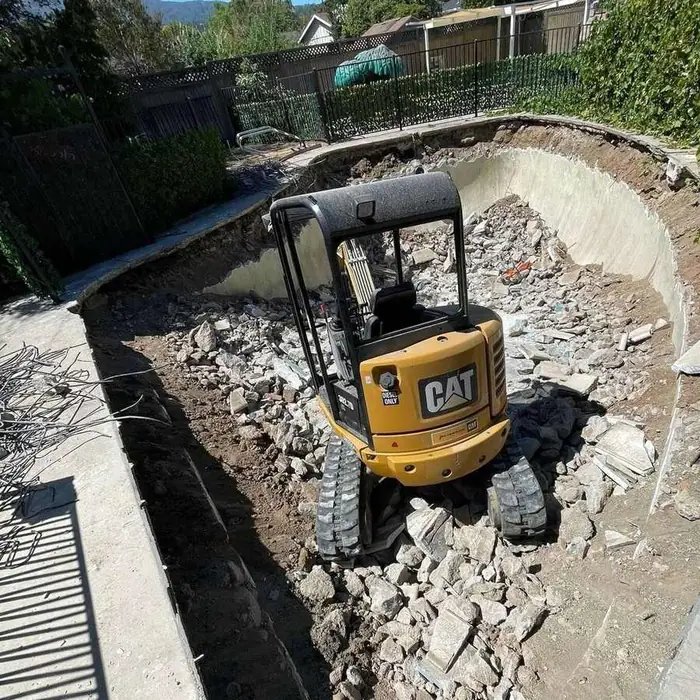
- Demolition and backfill. The actual breaking, removal, and filling of the pool shell usually takes two to four days on site, followed by compaction of the fill material in lifts.
- Final inspection and sign-off. A building inspector visits to verify the fill was done correctly, and once they approve the work, the permit is closed and your property record is updated.
Ready to Get a Real Number for Your Project?
Call us for a free on-site assessment and we will walk you through the permit requirements specific to your city before you commit to anything.
Get My Free EstimateWhat Happens During the Permit Phase
The permit phase feels passive because most of it happens at city hall, not on your property. You submit, you wait, and sometimes you respond to a request for additional information. In East Bay cities like Pleasanton or San Ramon, a straightforward residential pool removal permit can move in under two weeks. In denser urban jurisdictions, plan for closer to four.
Your contractor should handle the permit application entirely. If a contractor asks you to pull your own permit, that is a red flag worth paying attention to. A licensed demolition contractor in California knows the local requirements and carries the liability that goes with the permit.
The Backfill Phase Is Where Corners Get Cut
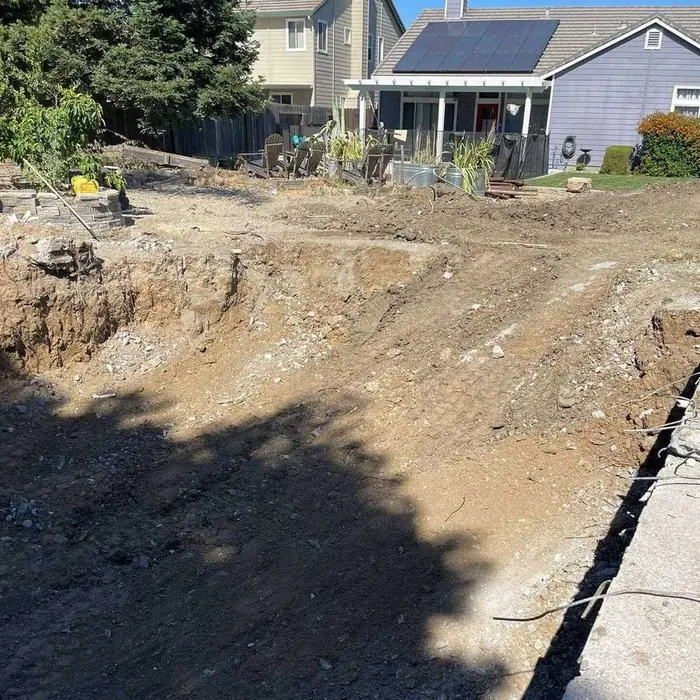
Once the pool shell is broken up and hauled away, the hole gets filled in layers called lifts. Each lift is compacted before the next one goes in. This process takes longer than simply dumping dirt into the hole, but it is the only way to prevent the ground from settling unevenly under future landscaping, a patio, or an addition.
Some contractors skip proper lift compaction to finish faster. The result shows up months or years later as a depression in your yard. A reputable contractor will provide a compaction report, and the final inspection will confirm the work meets local standards before the permit closes. Related reading: Driveway Removal The Real Timeline and Pool Removal Cost in Contra Costa County (2026).
The permit closes when the inspector signs off, not when the crew drives away.
Legacy Demolition site leadCommon Questions About Pool Removal Timelines
How long does the entire process take from first call to final sign-off?
Most residential pool removals in the East Bay take between four and eight weeks from the initial consultation to permit close-out. The range depends primarily on permit processing speed at your local jurisdiction and inspector availability.
Can I speed up the permit process?
Some cities in Contra Costa and Alameda County offer over-the-counter permit review for straightforward residential demolition projects. Your contractor can tell you whether your city qualifies and what documentation gets you to the front of that line.
Do I need to be home during demolition?
You do not need to be present for the daily work, but you should be reachable in case the crew encounters unexpected conditions like unmarked utilities or reinforced concrete requiring a different approach. A single point of contact between you and the crew saves time.
What happens to the yard after the pool is removed?
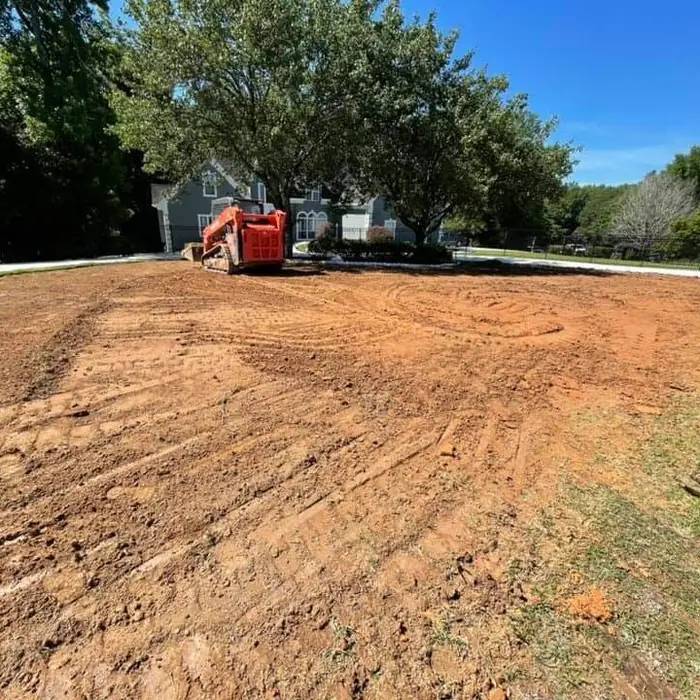
The filled area will be graded to match the surrounding grade and seeded or left for your landscaper depending on what you arrange in advance. A compaction report documents that the fill was done correctly so future improvements on that area are on solid ground.
Every project starts with a free on-site walk-through. Call (510) 804-1333 or request your free estimate.

Licensed, insured, and local to the East Bay.
Legacy Demolition is a licensed demolition and excavation contractor based in El Sobrante, working across Contra Costa and Alameda County. One fixed written number per job, with permits, utility coordination and disposal included.
 Residential Demolition
 Pool Removal
 Excavation
 Concrete Removal
 Driveway Removal
 Land Clearing
 Dirt & Grading
 Bobcat & Excavator
 Commercial Demolition