What Happens to the Ground After a Garage Comes Down
Learn what soil, drainage, and grading work is needed after a garage demolition so your cleared site is actually usable.
Pulling a garage off a property is satisfying work, but the slab and footings are only the beginning of the story. Once the structure is gone, you are looking at a patch of ground that has been compressed, sealed, and chemically altered for decades. What you do with that ground in the days after demolition shapes every project that follows.
Our crew serves homeowners and contractors across Contra Costa and Alameda County with demolition, excavation, and site clearing work. We have handled hundreds of garage teardowns in cities like Walnut Creek, Concord, Oakland, and Hayward, and the ground conditions we find underneath are rarely simple.
Why the Soil Under a Garage Needs Attention
A concrete slab blocks sunlight, air, and water from reaching the soil beneath it for years, sometimes generations. That isolation changes the soil structure in ways that matter the moment you expose it. You often find compacted, oxygen-poor ground that drains poorly and struggles to support new construction or landscaping.
Footings create a different problem. They extend below the frost line, which in the East Bay means anywhere from twelve to twenty-four inches down, and they leave voids or hard intrusions when removed. Gravel base layers beneath the slab can also trap water if the surrounding grade has shifted over time. Skipping an assessment of these conditions is how you end up with a sunken patio or a flooded ADU foundation two years later.
Five Ground Conditions to Check After Garage Removal
- Compaction depth. Have a technician probe or test the soil to find out how deep the compaction runs before assuming the ground is ready to build on.
- Slab debris. Broken concrete chunks left in backfill create voids that settle unevenly, so every fragment needs to come out.
- Drainage slope. The cleared area should pitch away from the main structure at a minimum grade so rainwater moves off the site without pooling.
- Oil and fluid contamination. Garage floors collect decades of motor oil and coolant that can penetrate several inches into the subgrade and may require remediation before grading.
- Utility remnants. Electrical conduit, gas stubs, and water supply lines sometimes dead-end under a garage slab and must be properly capped or removed before any new work begins.
Not Sure What Your Site Needs?
Call our East Bay team for a straightforward site visit and we will tell you exactly what the ground needs before your next phase of work.
Get My Free EstimateGrading After Demo Is Not Optional
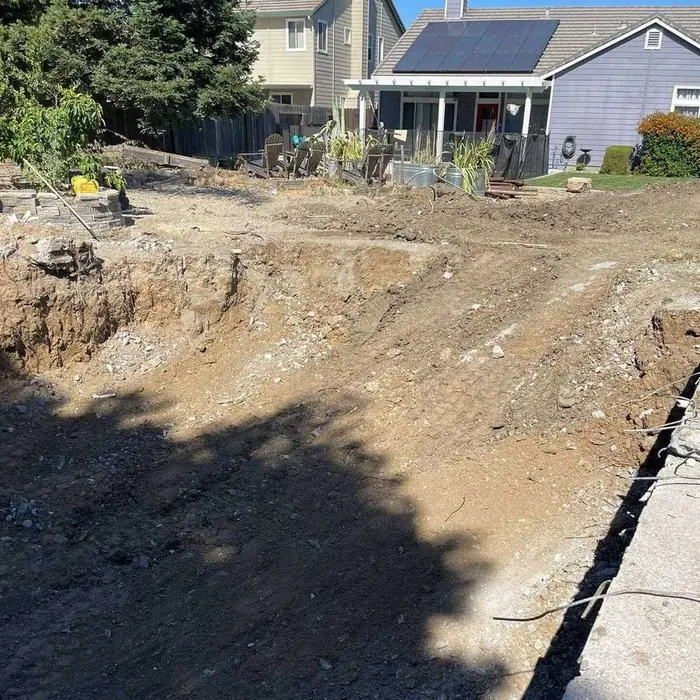
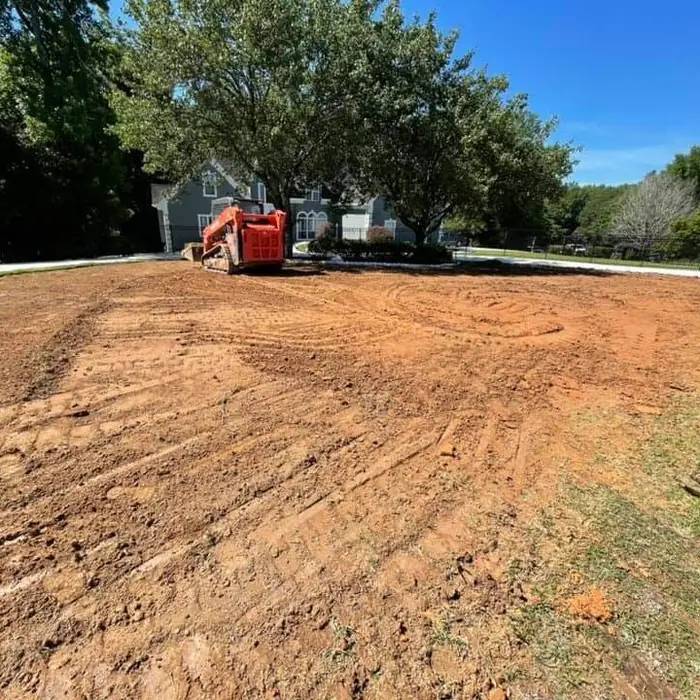
Once the slab and footings are out, the exposed area almost never sits at the right elevation. Removing a four-inch slab plus an eight-inch gravel base drops the surface by nearly a foot compared to surrounding areas. Without regrading, that low spot collects water every time it rains and sends it straight toward your foundation.
Proper grading involves bringing in clean fill, compacting it in lifts, and finishing the surface so it ties into the existing yard elevation and drainage pattern. In the East Bay, where clay soils are common in cities like Richmond and Antioch, getting that compaction right matters more than almost anywhere else. Clay holds water and shifts when it wets and dries, so loose or uneven fill under clay will move.
Soil Testing and What It Actually Tells You
A basic soil test after a garage teardown checks for load-bearing capacity, drainage rate, and contamination. If you plan to build an ADU, add a driveway, or put down a lawn, each of those end uses has different requirements and the test results help you choose the right path. Skipping the test and guessing is a common way that projects run over budget later.
Contamination testing is worth doing if the garage was used for automotive work or stored chemicals. California has clear guidelines on how contaminated soil must be handled and disposed of, and a licensed contractor can walk you through that process. Catching contamination now costs far less than addressing it after a new structure is built on top of it. Related reading: What Happens During an Interior Demo Walk-Through and Garage Demolition Cost in the East Bay (2026).
The demo is the easy part. The ground work is what makes or breaks the next project.
Legacy Demolition site leadCommon Questions
How long does grading take after a garage is removed?
Most residential grading jobs in the East Bay wrap up in one to two days once the demo debris is cleared. The timeline depends on how much fill is needed and whether any contamination or utility work adds steps to the process.
Do I need a permit to regrade after garage demolition?
In most Contra Costa and Alameda County cities, minor grading that moves less than a certain volume of soil may not require a separate permit, but it varies by jurisdiction. Your contractor or local building department can confirm what applies to your specific address.
Can I just pour a new slab right after the old one comes out?
Not without compacting the subgrade first. Loose or disturbed soil under a new slab will settle unevenly and crack the concrete within a few years.
What happens to oil-contaminated soil during a garage demo?
Contaminated material must be excavated, transported by a licensed hauler, and disposed of at an approved facility under California regulations. Your demo contractor should be able to coordinate that process or refer you to someone who handles it.
Every project starts with a free on-site walk-through. Call (510) 804-1333 or request your free estimate.
Licensed, insured, and local to the East Bay.
Legacy Demolition is a licensed demolition and excavation contractor based in El Sobrante, working across Contra Costa and Alameda County. One fixed written number per job, with permits, utility coordination and disposal included.
 Residential Demolition
 Pool Removal
 Excavation
 Concrete Removal
 Driveway Removal
 Land Clearing
 Dirt & Grading
 Bobcat & Excavator
 Commercial Demolition